Trekking

Bhutan still has
empty mountains.
You can walk into them.

Fewer than 5,000 people trek in Bhutan each year. The Snowman route alone has been completed by fewer climbers than have summited Everest. Every route below is fully supported — ponies, camp crew, sat-phone, oxygen on the high passes.

We're refreshing this catalogue. In the meantime, write to us and we'll build a trip from scratch.

Trekking in Bhutan

Walk into the
last empty Himalayas.

Seven things to know about trekking in Bhutan — from the gentle Druk Path to the legendary Snowman traverse. Scroll through.

Why Bhutan is different

Why Bhutan is different

Fewer than 5,000 trekkers a year set foot on a Bhutanese trail. There are no commercial teahouses, no marked routes painted on rocks, no porters waiting at the trailhead for hire. Every trek is camp-based, fully supported, and run by people who live in these valleys.

Permits are required, even for short routes, and they cap how many groups can be on a trail at any one time. The Snowman traverse — Bhutan's most demanding — has been closed to new bookings in some years to give the high pastures a season to rest.

The mountains themselves are sacred. No commercial summits are attempted on Bhutanese peaks above 6,000m by national law. You walk to base camps, over passes, around the holy mountains — never to their tops.
The Druk Path Trek

The Druk Path Trek

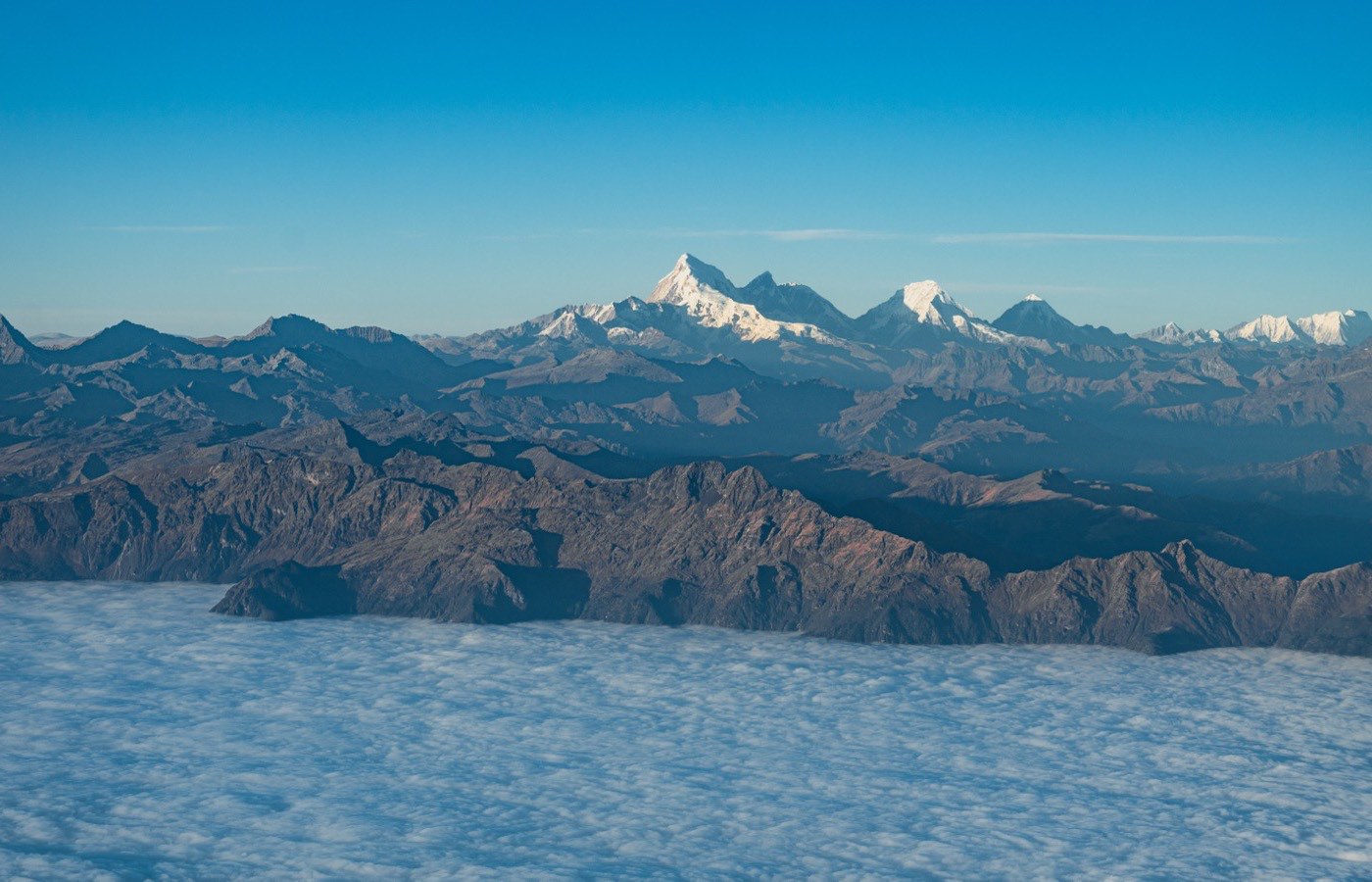
A 5–6 day moderate trek over the ridge that separates the Paro valley from Thimphu — the most popular short trek in Bhutan and the gentlest introduction to camping at altitude. Maximum point is around 4,200m at Phume La.

The route passes a string of high alpine lakes — Jimi Lhakhang, Janetso, Simkota — and crosses old yak-herder camps where families still bring their herds up each summer. Rhododendron forests in spring; clear ridge views year-round.

Fit walkers manage it without acclimatisation days. We schedule it across 6 days to give you the third afternoon free to rest. Pony team carries the loads; you carry a day pack.

Jomolhari Base Camp

Jomolhari Base Camp

A 7–9 day trek up the Paro Chhu valley to the base of Jomolhari, Bhutan's most iconic peak — 7,326m of glaciated south face that fills the entire horizon once you reach Jangothang base camp at 4,200m.

Jomolhari is sacred to the Bhutanese; it has never been climbed from this side. The base camp is shared with a small army outpost guarding the northern frontier. Yaks graze the pasture; blue sheep can be spotted on the cliffs above.

Two acclimatisation days at Jangothang let you side-trip to Tshophu Lake or up the ridge toward Tsherim Gang. Stronger groups extend the route over Bhonte La to Lingshi and out via Soi Yaksa — the Jomolhari Loop, 9–10 days.

The Snowman traverse

The Snowman traverse

Twenty-five days. Nine passes above 4,500m. A combined elevation gain that exceeds the height of Everest from base camp. Fewer climbers have completed the Snowman than have summited Everest — and the failure rate is roughly half.

The route runs from Paro through Jomolhari, Lingshi, Laya, Lunana, and over the Rinchen Zoe La (5,320m) before descending into Bumthang. Three weeks at altitude with no road access in or out — the only way home from a Snowman injury is by helicopter.

We run it once a year in October, with strict fitness screening at the booking stage and a medical sign-off required. Camp crew of 12+, including a dedicated trek doctor, oxygen on the high passes, and sat-phone contact every evening.

Camp life

Camp life

Every Bhutanese trek is fully camp-based — no teahouses, no village lodges. You arrive at camp each afternoon to find tents pitched, kitchen smoking, hot drinks on the mess-tent table. Sleeping tents are two-person, with insulated pads supplied.

Pony or yak crews handle all the heavy lifting between camps — your tent, your duffel, the dining tent, the kitchen kit. You walk with a day pack: water, snacks, layers, camera.

The cook is the heart of every Bhutanese trek. Three hot meals a day from a tent kitchen, baked goods most evenings, and chilli-cheese stew (ema datshi) on demand. Vegetarian and dietary requests are easy — tell us at the booking stage.

Altitude & pace

Altitude & pace

Every trek above 3,500m is built around acclimatisation. Days are paced so you sleep no more than 500m higher than the previous night, and we schedule one rest day for every 1,000m gained above 3,800m. Slow is fast at altitude.

Trek leaders carry a pulse oximeter and check oxygen saturation at camp each evening. Anyone tracking below 80% gets a forced rest day before continuing. Symptoms of AMS — headache, nausea, sleep disturbance — are treated as serious from the first day.

No prior altitude experience is required for routes up to Jomolhari Base Camp. For the Snowman, we expect a recent multi-day trek above 4,500m and a written health clearance from a sports physician.

When to trek

When to trek

The two main windows are spring (mid-March to early June) and autumn (mid-September to mid-November). Spring brings rhododendron blooms across the lower passes; autumn brings the clearest skies of the year and the firmest trail conditions.

Monsoon (mid-June to mid-September) closes most high passes — trails are washable, leeches are abundant, and the high pastures flood. Some lower-altitude cultural treks (the Bumthang Owl Trek, the Samtengang circuit) remain walkable.

Winter (December to February) is dry, sunny, and freezing. The Druk Path is sometimes runnable with crampons and a winter-experienced leader; Jomolhari and Snowman are closed. Most travellers wait for spring.

Plan Your Trip

Don't see your trip?
Tell us the one you'd take.

Most of our work is built from scratch. Send a sentence — when you'd come, who's travelling, what you care about — and we'll draft an itinerary in 48 hours.

  • Free itinerary design · You pay only when you confirm
  • Real Bhutanese guides · Licensed by the Department of Tourism
  • Private trips only · No groups, no shared transfers